From Public Consultation to a Recorded Decision
Public consultation to a recorded decision: trace how a council sorts your feedback, weighs options and explains its choice, so you can see what happened next.
Where does your comment go after a council consultation closes? Following public consultation to a recorded decision means tracing how the council handles the responses, not simply waiting to see whether the proposal changes. The most revealing detail may be how a concern was interpreted and weighed, even when the final option stays the same.
What kind of response is the council inviting?
Read the consultation questions alongside the proposal. The council may be asking residents to compare specific options, comment on a draft, or describe a problem before officers develop solutions. That distinction tells you what sort of response will be useful and what the council is actually seeking to learn.
Look for constraints as well as choices. A proposal might be shaped by a legal duty, a service contract or decisions made by another public body. If the consultation papers do not explain an apparent limit, ask the named council contact whether it is fixed or still open to consideration.
Check who can respond, which formats are available and how to submit a comment. If an online form is difficult to use, ask the council about paper, accessible or assisted options. Note the closing date and any instructions for submitting attachments or responses by post.
How can you make a comment specific and useful?
Choose a particular feature of the proposal, describe its likely effect and, where possible, suggest an alternative. Separate unrelated points so officers can understand what each one addresses. A location, route, time of day or named service can make a concern easier to assess than a general statement of support or opposition.
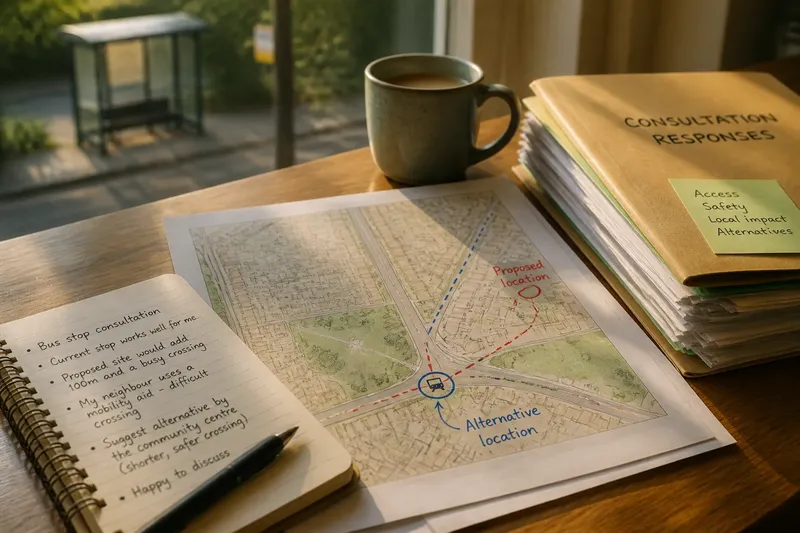
Say you live beside a bus stop the council proposes to move. In this invented situation, your starting point is the current stop and a nearby crossing; you describe how the proposed site would affect a neighbour using a mobility aid, then suggest a different nearby location. The expected result is a comment officers can assess against access and safety considerations, although it does not dictate which site they choose.
A marked-up map, a short account of a journey or a reference to a council document may help make your point clear. Avoid sending sensitive personal details unless they are needed and the council has explained how it will handle them. Keep a copy of your response and any acknowledgement so you can refer to what you actually submitted.
How are responses interpreted after the deadline?
Officers may sort comments into themes, identify points that need technical checking and summarise recurring views for a report. A summary is an interpretation of the responses, not a transcript of every submission. Read its categories carefully: a concern about access, for instance, may be grouped under a broader heading such as service design.
Frequency can help show that an issue is widely shared, but repetition alone does not settle the decision. A less common response may raise a practical or legal concern that needs attention. Officers may consider consultation comments alongside service information, equality considerations, technical advice and other relevant material.
One way to understand the process is to think of a response as a note going into a folder: it matters, but it sits beside other information the decision-maker must consider. The useful question is not only whether a point appears in the summary, but whether its substance is recognised and addressed.
How can you tell whether feedback changed the proposal?
A report may describe amendments made after consultation, suggestions that were not adopted and the reasons for each. Distinguish between a concern being acknowledged and the proposal changing in response. The decision-maker may accept that a problem exists while deciding that another consideration outweighs a particular remedy.
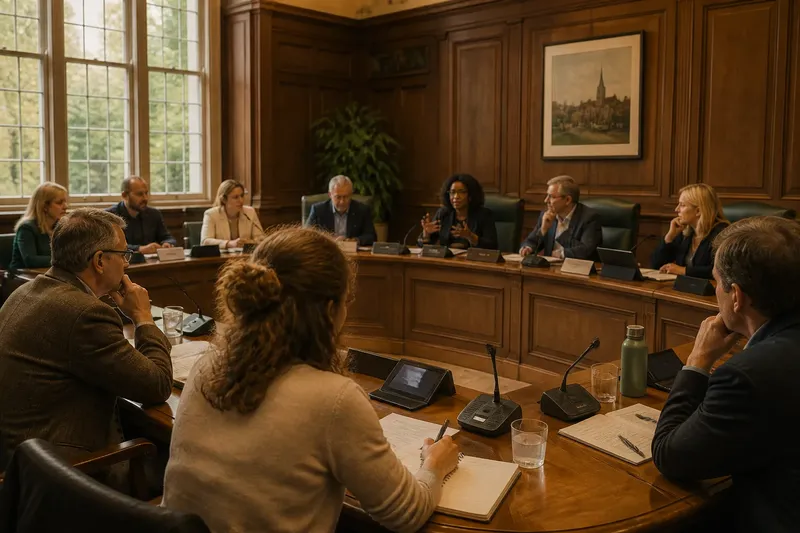
The authorised person or committee then considers the relevant material under the council’s arrangements. It may approve the proposal, amend it, defer it for more work or reject it. A consultation is not automatically a vote: the papers should explain the process being used and how responses inform the judgement.
When reading the report, connect each option to the reasons given for keeping or changing it. If the account says an alternative was considered but does not explain why it was set aside, that is a specific question to raise with the council contact.
What should you check in the council’s decision papers?
Search the council website using the consultation title, proposal, service or place name. The report may use different wording from the original consultation page. Look for papers linked to the relevant committee or decision-maker, and check whether a later version or addendum has been published.
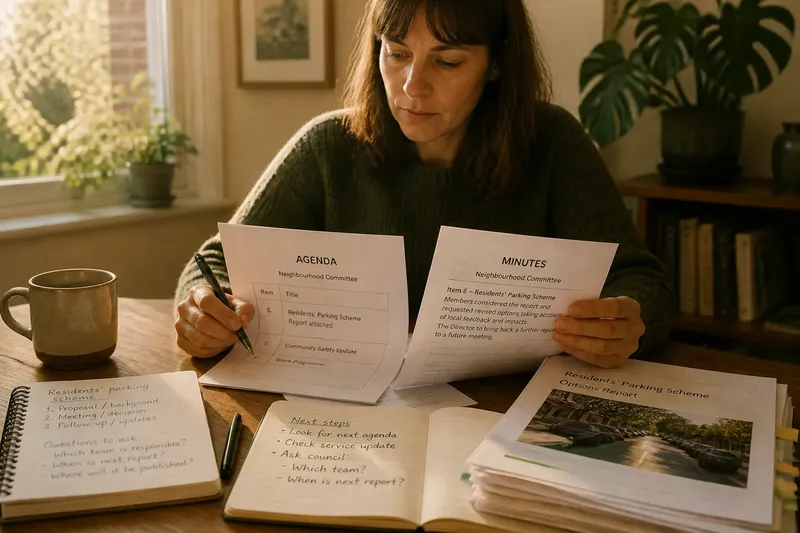
Read the decision wording first, then compare it with the report’s reasoning. Check what was approved, whether conditions or further work were attached, and when the decision is due to take effect. The report should help explain how consultation responses were considered alongside the available options and other relevant factors.
A simple comparison can make the explanation easier to follow:
- Check what residents raised; if the concern is described accurately, compare it with the response, and if it is missing or mischaracterised, ask the council where it was considered.
- Check whether the report identifies a change prompted by feedback; if it does, note the change, and if it does not, ask whether the proposal remained unchanged or the link was not recorded.
- Check the reasons given for rejecting an alternative; if they address the concern, consider whether they answer your question, and if they do not, ask for the relevant explanation.
- Check who made the decision and under what process; if the papers identify the decision-maker and authority, follow that route, and if they do not, ask the council to point you to the applicable record.
- Check for conditions, further work or a later review; if these are specified, note the responsible service or next update, and if they are absent but were mentioned elsewhere, ask whether they remain planned.
- Check whether the decision takes effect immediately or after a stated action; if the timing is clear, use it to understand what happens next, and if it is unclear, ask the relevant service to clarify the implementation arrangements.
These checks are a reading aid, not an official council form. They help separate what the papers say from what you still need to ask.
What questions do residents ask about consultation outcomes?
Can the council change its proposal after consultation?
It may revise an option if the process and applicable requirements allow it. Look for the report’s account of amendments and the reasons behind them; the council may also explain why it retained parts of the original proposal.
Does a large number of similar comments decide the outcome?
Not automatically. Shared concerns can be relevant, but the authorised decision-maker considers them with other relevant factors and follows the council’s decision process.
Where can I see how my comment was treated?
Start with the consultation page and any linked response summary or report, then search the council’s published papers using the proposal or place name. If the summary does not show how a particular issue was handled, ask the named contact where that theme was considered.
What can I do if the papers leave a question unanswered?
Write to the relevant council contact, name the proposal and identify the passage or concern you cannot trace. Ask which paper explains the point or whether a further update is expected; for formal rights or a dispute about the process, seek advice from an appropriate qualified professional.
How can you keep track of what happens next?
Keep the consultation page, your submitted response and the council papers together. If the decision assigns later work, note what the council says will happen and which service is responsible. An agreed decision can settle the choice while leaving practical arrangements for officers to complete.
If you still cannot see how a concern was handled, make your enquiry narrow: identify the issue, point to the consultation or report and ask where it was considered. That gives council staff a clear trail to follow, and gives you a more useful answer than asking whether your comment “won”. Public consultation to a recorded decision is easier to understand when you can trace the reasoning, the chosen option and any work still to come.